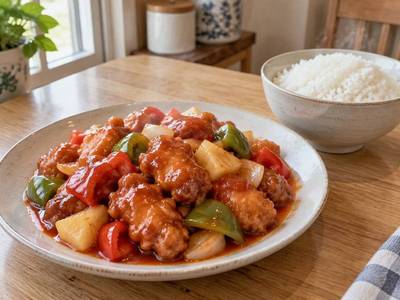
Sweet & sour (red sauce) pork chop
Sweet and sour pork chops with fresh tomatoes, our red-sauce version.
From our family kitchen
What velveting is, why stir-fried meat comes out soft, and the difference between water and oil velveting.
Velveting is a way to prepare thin slices of meat or seafood so they stay soft in a stir-fry. America's Test Kitchen describes the basic approach as coating thin pieces in a cornstarch-based mixture, then cooking them gently and briefly before the stir-fry.
Amounts and times differ from recipe to recipe, so follow the recipe you are cooking.
Each piece wears a thin coat of starch. The short pre-cook sets that coat and cooks the meat gently. Because the meat is already partly cooked, it only needs a quick turn in the wok at the end, so it does not overcook. Cooks also say the coating helps a sauce cling to the meat (NYT Cooking).
Sources explain it a little differently, so read this as a short summary, not a lab result.
Oil velveting passes the meat through oil at about 275 to 300°F (roughly 135 to 150°C) for around 30 seconds, according to America's Test Kitchen. Water velveting uses boiling water instead, sometimes with a splash of oil, and is simpler for many home cooks.
The same article says the author Irene Kuo recommends oil for beef and water for chicken.
Some cooks add a little baking soda to the coating. Methods vary, so check your recipe for what to use.
None of our recipes is a full velveting recipe with a pre-cook step. These three own recipes use a cornstarch coating or marinade, which is a simpler cousin of the same idea.
Sweet and sour pork chops with fresh tomatoes, our red-sauce version.
From our family kitchen
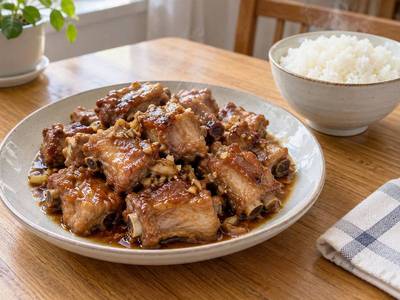
Pork ribs marinated in plum & soybean sauce, then steamed.
From our family kitchen
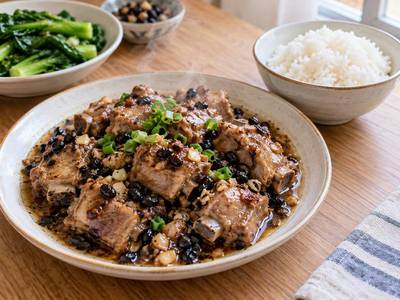
Pork ribs steamed with fried garlic and fermented black beans.
From our family kitchen
Facts on this page come from these pages. We have summarised them in our own words.